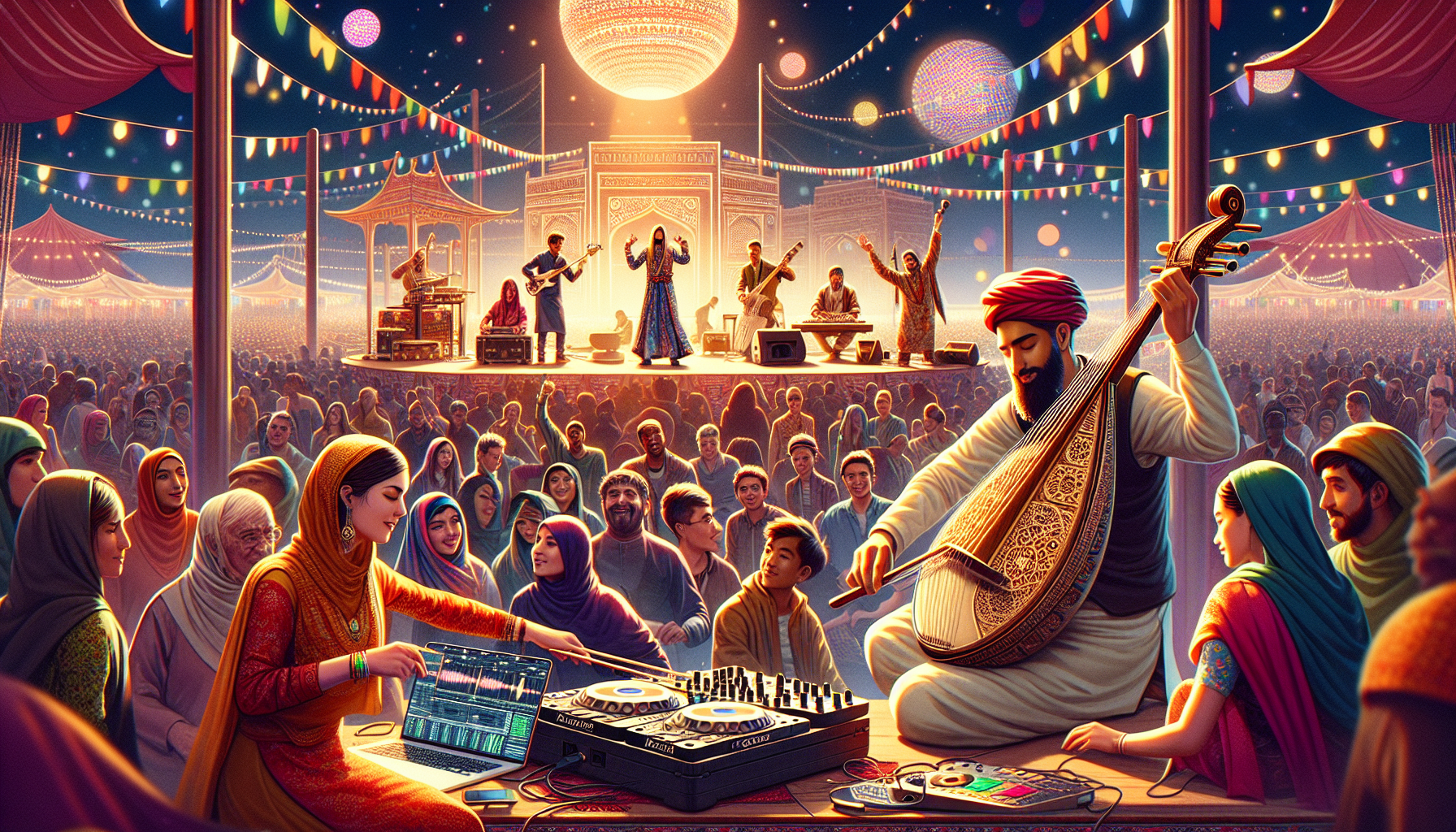
Something extraordinary is happening at festivals around the world in 2026. Walk through the gates of any major cultural gathering — whether it’s a folk music celebration in the Scottish Highlands, a jazz extravaganza in New Orleans, or a traditional dance festival in Rajasthan — and you’ll witness a fascinating tension playing out in real time. On one stage, an elder master performs with decades of wisdom etched into every note. On the next, a twenty-three-year-old digital producer remixes those same traditions into something that pulses with contemporary energy. This is the heartbeat of festival culture today: a living, breathing negotiation between what has been and what is yet to come.
The Sacred Ground of Tradition: Why Heritage Matters More Than Ever
Before we can understand where festival culture is heading, we need to appreciate what it’s protecting. Festivals have always been more than entertainment. They are living archives — repositories of language, movement, sound, and meaning that communities have passed down across centuries. The flamenco festival in Jerez de la Frontera doesn’t just showcase dance; it preserves an entire emotional vocabulary. The Rainforest World Music Festival in Borneo doesn’t merely entertain; it gives indigenous musicians a platform that defies erasure.
In 2026, the urgency of preservation has never been sharper. Ethnomusicologists warn that approximately 40% of the world’s musical traditions face extinction within the next two generations if proactive steps are not taken. Languages are dying at similar rates, and with them go the songs, stories, and ceremonial practices that define entire peoples. Festivals, in this context, become acts of cultural resistance — joyful, communal, and deeply necessary.
What makes festival preservation particularly powerful is its embodied nature. You cannot truly learn a traditional drumming pattern from a textbook. You cannot absorb the meaning of a ceremonial chant through a YouTube tutorial alone. Festivals create the conditions for transmission that no digital archive can fully replicate: the shared breath of musicians performing together, the elder’s hand guiding a young dancer’s posture, the collective memory activated when a community gathers around a fire.
The New Generation of Performers: Disruptors or Inheritors?
Here’s where the conversation gets genuinely exciting — and occasionally contentious. The new generation of performers arriving at festivals in 2026 is unlike any that came before. They grew up with global music at their fingertips, absorbing Afrobeats alongside bluegrass, Korean pansori alongside Argentinian tango. They are fluent in digital production tools that their grandparents couldn’t have imagined. And they are, often quite deliberately, refusing to choose between heritage and innovation.
Consider the phenomenon of artists like Aroha Ngata, a young Māori composer who layers traditional waiata vocal techniques over electronic soundscapes, performing to sold-out festival crowds in Auckland and Berlin alike. Or think about the ensemble Raízes Digitais from São Paulo, who incorporate capoeira rhythms into live-coded performances that change algorithmically with audience input. These artists are not abandoning their roots — they are growing new branches from ancient trunks.
However, tensions do exist. Festival organizers, cultural gatekeepers, and community elders sometimes struggle to reconcile their protective instincts with the creative freedom younger performers demand. The questions being asked at cultural councils and festival planning committees around the world in 2026 are both practical and philosophical:
- When does innovation become appropriation or distortion?
- Who has the authority to decide what constitutes an authentic expression of a tradition?
- How do we make space for experimentation without sacrificing the integrity of what we’re trying to preserve?
- Can a tradition survive if it doesn’t evolve?
These are not easy questions, and the most thoughtful festivals are not pretending they have easy answers. Instead, they are creating structures for dialogue — bringing elders and young artists into the same rooms, the same rehearsal spaces, the same late-night conversations around festival campfires.
Structural Innovations: How Festivals Are Rebuilding Themselves for 2026
The most forward-thinking festivals in 2026 are not simply booking both traditional and contemporary acts and calling it diversity. They are fundamentally rethinking their architecture — both physical and programmatic — to facilitate genuine exchange.
Mentorship Stages and Collaborative Programming
One of the most impactful structural innovations is the emergence of mentorship stages — dedicated performance spaces where established traditional artists perform alongside emerging talents in a collaborative rather than competitive format. The Edinburgh International Festival has pioneered a program called “Living Lineage” where a master musician and a contemporary artist spend three days in residency together before co-performing. The results have been, by nearly all accounts, extraordinary — unexpected fusions that neither artist could have created alone, and that neither audience member could have anticipated.
Digital Documentation and Community Archives
Festivals are increasingly investing in sophisticated documentation programs that go beyond simple video recording. Spatial audio capture, motion tracking for dance traditions, and community-curated digital archives are becoming standard infrastructure at major cultural events. The goal is not to replace live transmission but to create supplementary resources that extend the reach of what happens on stage.
The Smithsonian Folklife Festival’s 2026 digital initiative, for example, has created immersive VR experiences that allow users to “stand inside” a traditional Appalachian string band performance — hearing the music from the perspective of each individual instrument. This technology is then used as an educational tool that drives attendance at live events rather than replacing it.
Youth Residency Programs
Many festivals have expanded their youth residency programs, offering young performers not just performance slots but extended periods of learning, creation, and community engagement. These residencies recognize that the new generation of performers needs more than a platform — they need context, mentorship, and the kind of deep cultural immersion that transforms influence into genuine understanding.
The Economics of Cultural Sustainability
Let’s be honest about something that cultural conversations sometimes avoid: preservation costs money. Traditional artists — many of whom have dedicated lifetimes to mastering incredibly demanding art forms — have historically been among the most economically precarious members of the creative economy. Festivals in 2026 are grappling with the ethical dimensions of this reality in more direct ways than their predecessors.
Progressive festivals are implementing tiered payment structures that compensate traditional and community artists at rates comparable to commercial headliners, recognizing that the value they bring — in cultural knowledge, community connection, and irreplaceable expertise — is at least equal to that of more commercially visible performers. Some festivals have established dedicated endowment funds for traditional arts programming, insulating heritage elements of their programming from the commercial pressures that affect mainstream booking decisions.
Additionally, the community benefit model is gaining traction. Rather than positioning themselves as external presenters of cultural content, the most respected festivals in 2026 are structuring themselves as genuine community partners — sharing revenue with source communities, involving community members in governance, and ensuring that economic benefits flow back to the people whose traditions are being celebrated.
Global Perspectives: Festival Culture Across Continents
The conversation about heritage and innovation in festival culture is not monolithic — it takes different shapes in different cultural contexts, and those differences are worth examining.
In West Africa, festivals like the FESMAN-influenced gatherings in Dakar are navigating the relationship between pan-African cultural identity and the hyper-local specificity of individual ethnic traditions, with young Afrofusion artists serving as bridges between continental pride and community specificity.
In Japan, traditional matsuri festivals are incorporating digital elements with characteristic precision and intentionality — augmented reality overlays that explain the historical significance of ritual movements to younger attendees who might otherwise find the ceremonies opaque, without disrupting the ceremonies themselves.
In Latin America, festivals are increasingly sites of political as well as cultural assertion — spaces where indigenous communities reclaim narratives that colonial histories attempted to suppress, with young performers using contemporary tools to amplify voices that mainstream culture has long marginalized.
Each context offers lessons for the others, and the increasing interconnection of the global festival circuit means that these conversations are happening in increasingly productive dialogue across cultural boundaries.
What Success Looks Like: Measuring Cultural Health
How do we know when a festival has genuinely succeeded in bridging heritage and innovation? The metrics are more complex than ticket sales or social media engagement, though those matter too. The most meaningful indicators of festival culture’s health in 2026 include:
- Intergenerational transmission rates — are young people actively learning traditional forms, not just consuming them?
- Community ownership — do source communities feel that their traditions are being honored rather than extracted?
- Artistic evolution — are new works being created that are genuinely rooted in tradition while pushing creative boundaries?
- Economic equity — are the economic benefits of cultural celebration flowing to those who hold cultural knowledge?
- Narrative control — are communities telling their own stories, or having stories told about them?
Looking Forward: The Festival as Living Institution
The most hopeful thing about festival culture in 2026 is its fundamental vitality. Despite — or perhaps because of — all the tensions and negotiations involved, festivals remain among the most powerful institutions humanity has for making culture visible, transmissible, and alive. They are places where a grandmother’s lullaby can inspire a young producer’s breakthrough, where an ancient drumming pattern can find its way into a global hit, where communities can see themselves reflected and celebrated.
The new generation of performers arriving at festivals in 2026 is not the enemy of tradition — far from it. At their best, they are its most passionate advocates, carrying cultural knowledge forward in forms that will resonate with generations yet to come. The festivals that understand this — that create genuine spaces for dialogue, collaboration, and creative risk — are not just entertainment venues. They are engines of cultural survival.
And in a world where so much is fragile, so much at risk of being lost to the noise and speed of modern life, that makes them among the most important institutions we have. The roots hold. The rhythms continue. And the conversation between past and future goes on.