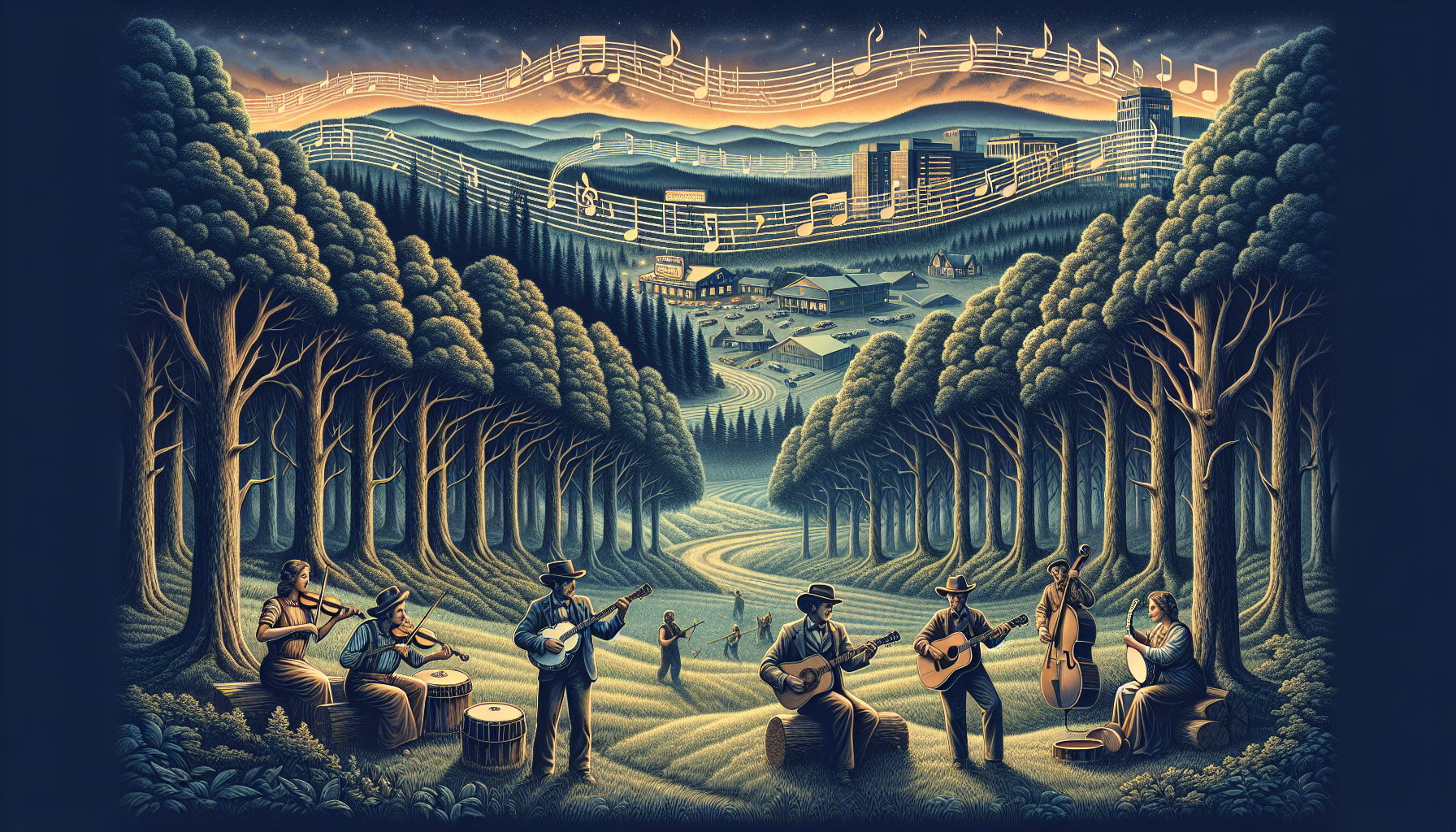
Long before electric guitars hummed through stadium speakers and streaming algorithms curated personalized playlists, music was being made on remote mountain porches, in candlelit cabins, and around crackling fires in the hollows of the Appalachian Mountains. These ancient melodies — carried across the Atlantic by Scots-Irish immigrants, blended with African rhythms, and shaped by generations of hardship and hope — form the very backbone of what we now call Americana. To understand modern Americana is to trace a winding path back through history, back through the fog-draped ridges of West Virginia, Kentucky, Tennessee, and Virginia, where songs were not entertainment but survival.
The Origins: Music Born from Isolation and Necessity
The Appalachian region, stretching roughly 1,500 miles along the eastern United States, was settled heavily during the 18th and 19th centuries by immigrants from the British Isles — particularly Scots-Irish families fleeing poverty and political turmoil. They brought with them a rich oral tradition of ballads, dance tunes, and work songs. In the isolation of the mountains, these musical traditions did not simply survive — they evolved into something uniquely American.
Without access to formal music education, printed scores, or even consistent instruments, Appalachian musicians passed their songs down by ear and by memory. This oral transmission created regional variations, personal interpretations, and an organic creativity that would prove deeply influential for centuries to come. The five-string banjo, adapted from African instruments, became a staple. Fiddles sang out at barn dances and weddings. Dulcimers hummed on front porches at dusk.
Songs told stories of real life — of mining disasters, lost loves, religious faith, and the stubborn beauty of mountain existence. Titles like Barbara Allen, Shady Grove, and Wayfaring Stranger are centuries old, yet their emotional resonance remains undimmed. These were not performances in the modern sense. They were communal acts of remembrance and identity.
Key Musical Elements That Traveled Forward in Time
What exactly did traditional Appalachian folk music pass on to later generations of American musicians? The answer lies in both structure and spirit.
Modal Scales and Haunting Harmonies
Traditional Appalachian music frequently uses modal scales — particularly the Dorian and Mixolydian modes — rather than the standard major or minor scales that dominate Western pop music. This gives the melodies their distinctive, slightly eerie, timeless quality. When you hear a modern Americana song that feels simultaneously ancient and fresh, there is a good chance the songwriter has — consciously or not — reached back for those same modal shapes.
Call and Response Patterns
Rooted partly in African musical traditions that merged with Appalachian folk, call-and-response structures appear throughout traditional mountain music and echo loudly in blues, country, and Americana today. This conversational quality between singer and instrument, or between lead and chorus, creates an intimacy that listeners instinctively connect with.
Narrative Storytelling
Perhaps the most enduring legacy is the commitment to storytelling. Appalachian ballads were literary in their ambition — multi-verse epics that followed characters through tragedy, redemption, love, and death. Modern Americana artists like Jason Isbell, Gillian Welch, and Sturgill Simpson carry this tradition forward with unflinching honesty and cinematic detail in their lyrics.
Raw, Unpolished Vocals
Traditional Appalachian singing was not trained in the classical sense. It was nasal, earnest, and emotionally direct. This vocal quality — sometimes called high lonesome sound — became central to bluegrass through Bill Monroe and has never truly left American roots music. The cracks in the voice, the bends in the notes, the rawness of the delivery: these are not imperfections but trademarks of authenticity.
The Bridge Builders: From Mountains to Mainstream
The journey from Appalachian hollows to the American mainstream did not happen overnight. Several pivotal figures and movements served as bridges between the old world and the new.
The Carter Family and Commercial Folk Music
In 1927, the Carter Family recorded for Victor Records in Bristol, Tennessee — a session that is often called the Big Bang of country music. A.P. Carter actively collected and preserved traditional Appalachian songs, while Maybelle Carter’s innovative guitar style influenced virtually every country and folk guitarist who followed. They brought mountain music to radio audiences across the country, making the regional universal.
The Folk Revival of the 1950s and 60s
Urban intellectuals and musicians like Pete Seeger, Joan Baez, and Bob Dylan rediscovered Appalachian folk traditions during the mid-20th century folk revival. Scholars like Alan Lomax traveled deep into the mountains with recording equipment, capturing voices that would have otherwise vanished. This revival reintroduced ancient songs to young Americans who had never heard a dulcimer, turning Shady Grove and House of the Rising Sun into touchstones of a generation.
Bluegrass: The Electric Spark in an Acoustic Tradition
Bill Monroe synthesized Appalachian string band music, blues, and gospel into what we now call bluegrass. Fast, technically demanding, and emotionally charged, bluegrass retained the mountain soul while pushing the music’s virtuosity to new heights. Bands like Flatt and Scruggs carried it to national television, and today artists like Rhiannon Giddens and the Punch Brothers reimagine bluegrass for contemporary audiences without sacrificing its roots.
Americana: The Genre That Contains Multitudes
The term Americana is famously difficult to define. The Americana Music Association describes it as music that incorporates elements of various American roots music styles, including country, roots rock, folk, bluegrass, R&B, and blues — resulting in a sound that is uniquely American. But beneath this broad umbrella, the Appalachian thread runs consistently.
Consider the following artists and their clear connections to the mountain tradition:
- Gillian Welch — Her sparse arrangements and narrative lyrics directly echo old Appalachian ballads. Songs like Barroom Girls and The Way It Goes could have been written in 1890.
- Jason Isbell — Raised in Alabama, Isbell’s storytelling precision and moral complexity connect directly to the tradition of mountain balladeers who refused to look away from difficult truths.
- The Avett Brothers — From North Carolina, their blend of folk banjo, old-time rhythms, and emotional intensity speaks directly to Appalachian roots.
- Sturgill Simpson — A Kentucky native, Simpson has explicitly embraced the high lonesome sound while pushing Americana into psychedelic and progressive territory.
- Rhiannon Giddens — Her work with the Carolina Chocolate Drops and as a solo artist actively recovers the African American contribution to Appalachian music, reminding audiences that this tradition was never exclusively white.
The African American Dimension: A History Too Often Overlooked
Any honest exploration of Appalachian music must acknowledge the profound African American contribution to its development. Enslaved people and free Black musicians shaped the banjo, influenced the rhythmic feel of mountain music, and contributed vocal traditions that merged with Scots-Irish styles to create something genuinely multicultural. The Blue Ridge Mountains and surrounding regions were home to significant African American communities whose musical contributions have been historically undervalued.
Rhiannon Giddens has been particularly vocal and active in recovering this history. Her research and performances demonstrate that the roots of Americana are not one color or one culture — they are a complex, intertwined heritage that belongs to all Americans and tells a fuller, more honest story of the nation itself.
Why These Ancient Melodies Still Matter Today
In an era of algorithmic music production, Auto-Tune, and globally homogenized pop culture, the persistence of Appalachian folk influence in modern Americana is both remarkable and deeply meaningful. It suggests that audiences hunger for authenticity — for music that comes from a real place, reflects real experience, and connects to something larger than the moment.
These melodies carry collective memory. When a modern songwriter reaches for a minor pentatonic scale that echoes an old mountain tune, they are participating in a centuries-long conversation. When a fiddle weaves through a contemporary Americana track, it brings with it the ghosts of barn dances, labor songs, and lullabies sung by people whose names we will never know but whose emotional truth we still feel.
The Appalachian folk tradition also models a certain democratic creativity — music made without gatekeepers, without record labels, without formal training requirements. It belongs to whoever needs it. That spirit of grassroots, community-centered music-making is alive in the DIY ethos of today’s Americana scene, in the house concerts and small venues where artists build audiences one honest song at a time.
Preserving the Legacy for Future Generations
Organizations like the Appalachian Regional Commission, the Smithsonian Folkways archive, and countless local cultural centers work to preserve recordings, instruments, and living traditions. Universities offer programs in Appalachian studies. Festivals like MerleFest in North Carolina and the Old Fiddlers Convention in Galax, Virginia draw tens of thousands of visitors annually, ensuring that the old tunes remain alive in performance rather than merely archived.
Digital platforms have also democratized access to this heritage in unprecedented ways. Young musicians in Brooklyn or Berlin can now listen to Alan Lomax field recordings from the 1940s, study old-time fiddle techniques on YouTube, and incorporate ancient scales into distinctly modern productions. The mountain music is no longer geographically confined — it lives in the global digital commons, available to anyone willing to listen carefully.
Conclusion: The Mountains Never Left the Music
Americana is many things — but at its heart, it is the sound of people trying to make sense of their lives through music that is honest about where it comes from. The Appalachian folk tradition gave American music its moral seriousness, its narrative ambition, its modal mystery, and its refusal to separate beauty from hardship. Every time a modern Americana artist sits down with an acoustic guitar and decides to tell a real story in a real voice, they are reaching back across the centuries to those mountain porches where music was not a product but a practice — not a career but a calling.
The echoes have not faded. If anything, in a world that often feels disconnected and disposable, they grow more essential with every passing year. The mountains may be distant, but their music is everywhere you choose to hear it.